As our brothers and sisters say, alhamdulillah. On to the next volume of work.
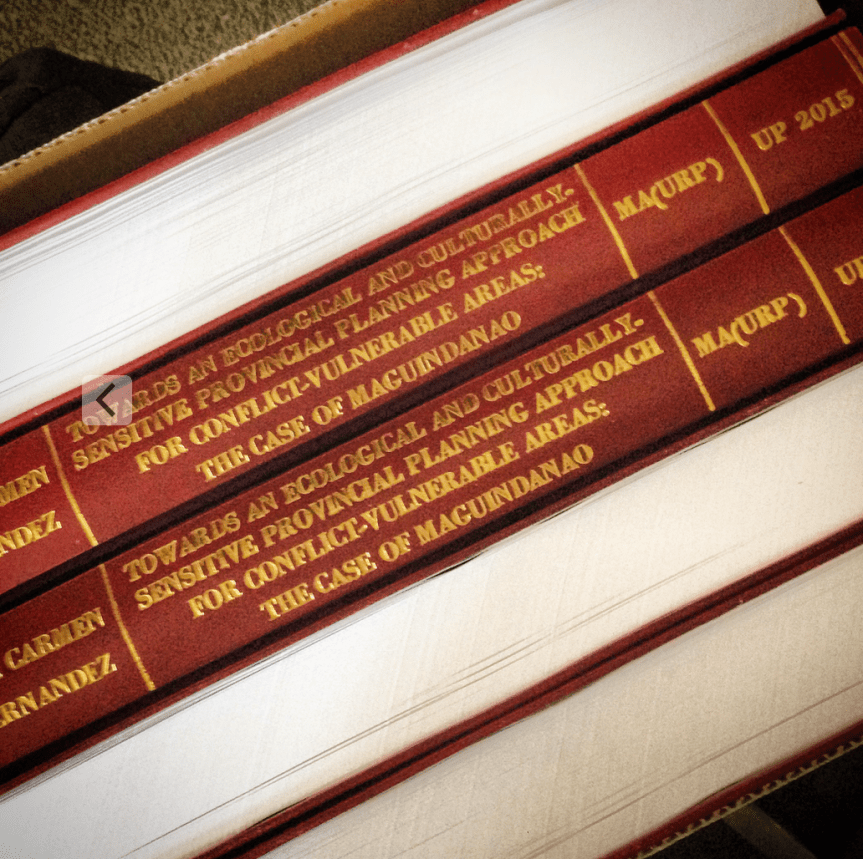

As our brothers and sisters say, alhamdulillah. On to the next volume of work.
Written for PLAN 201, which has been an awesome start to my stay at the UP School of Urban and Regional Planning. The prof is cool enough to let the substantial experience from the class (a good mix of government development workers, architects, engineers and researchers) emerge, while being to frame it theoretically without clamping down on the freewheeling discussions. There have been times where the thought of a cheery Saturday class was enough to get me through a brutal workweek. Gotta brush up on stat, though.
—
Thought Paper: On Davao City, growth poles and cumulative causation
What comes to mind when discussing spatial theories of regional development such as growth poles (Perroux) and cumulative causation (Myrdal) is the case of Davao City, which is currently the most important development center in Mindanao, and is emerging as a strategic regional growth center, particularly in the context of the Brunei-Indonesia-Malaysia-Philippines East ASEAN Growth Area (BIMP-EAGA).
I believe Davao City is a prime example of how development has a tendency to cluster in centers, resulting in major urban concentrations that are key development hubs from a national perspective, and have the potential to play a regional role in the realms of culture, business, and international transport. Its strategic location practically assures this—found in the southeastern tip of the Philippines, Davao is the natural jump-off point for travellers from Northern and Central Mindanao before heading to the Zamboanga Peninsula and the islands of Basilan, Sulu and Tawi-Tawi. It has also begun to be a gateway to Southern Philippines for international travellers from Southeast Asia and even Australia and the United States. The last two decades have also seen a boom in Davao City’s economic growth. This can be seen in multiple centers and industries within the city, which as shown in the chart below from the Davao City Planning and Development Office, spans seven growth sectors, which makes good use of its massive 244 hectares (as it is one of the largest cities in the world by area).
Continue reading “Thought Paper: On Davao City, growth poles and cumulative causation”
Originally posted on 5 May 2011 here.

Last week’s grisly events at Laperal Compound prompt me to riff on something near and dear, but is rarely spoken of by fellow Manileños: our relationship to space and place. Not a fan of violence (or the criminal elements taking refuge in such slums), but if someone’d raze my community to the ground and dismantle the boards of my home, then I’d certainly feel like hurling molotovs and shitbombs too. In the midst of the protests, one Laperal Compund leader even said that they’d rather die where they stand than relocate to far-flung Calauan or Montalban, where death is a greater, if slower, certainty: no electricity, water, access to health services, schools. In such conditions, she said, “unti-unti kaming pinapatay ng pamahalaan: magiging libingan na namin ang lupang pagtitirikan namin ([they] are being killed slowly by the state: the land [they’re] cast to will be [their] graves)”. [1]
But what differentiates us middle-class folk from informal settlers anyway? Not much, really. Just the luck of being born into the socioeconomic means of legally owning/renting a home–with its accordant veil of delusion, thinking that our shoebox condominiums and gated subdivisions are somehow better, safer, healthier places. But we’re just as disconnected.
 Notes from the Field